
Freezer Door Gasket Replacement: Signs, Cost, and What to Expect
May 14, 2026 · Cal Gaskets
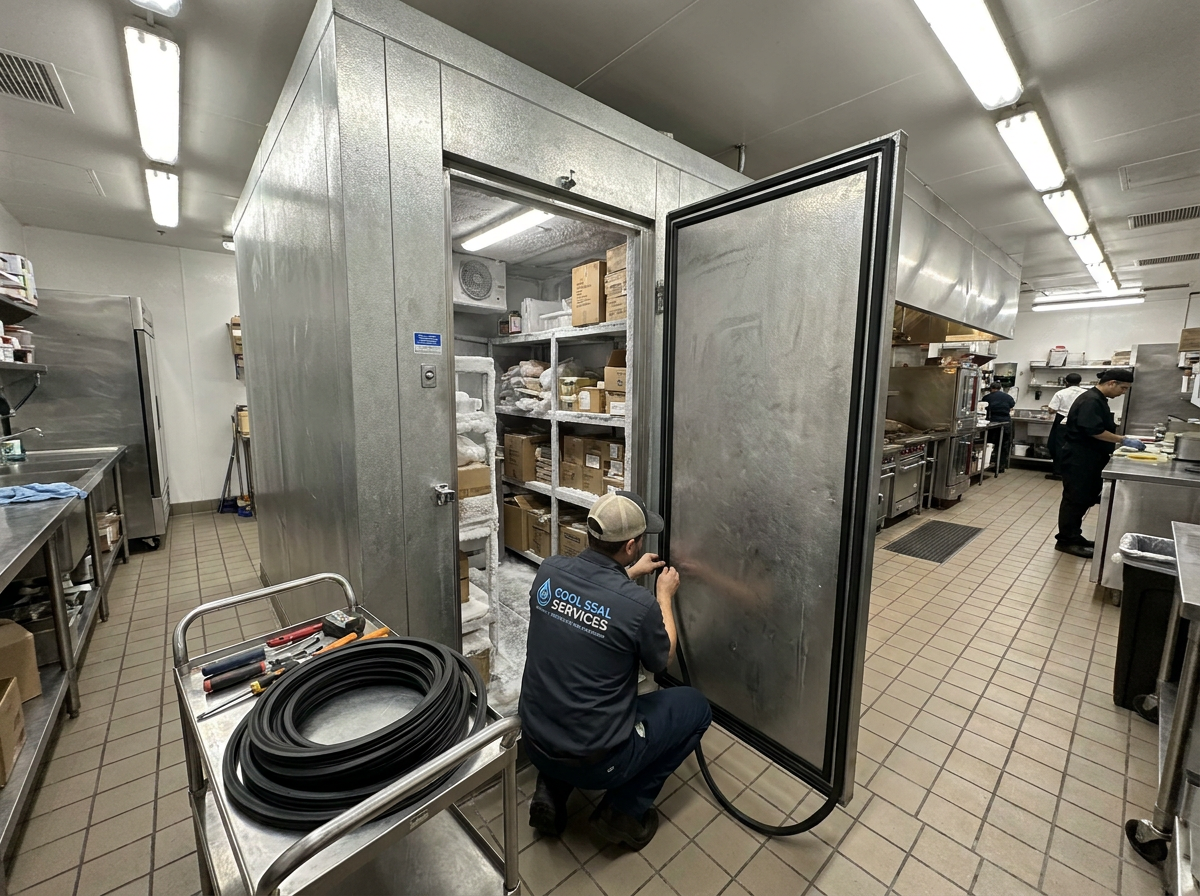
Your freezer door gasket is one of the hardest-working components in your facility — and one of the most overlooked. It's the rubber seal running around the perimeter of every freezer door, doing nothing but holding back the cold, 24 hours a day, 365 days a year. When it starts to fail, the consequences are immediate: energy bills climb, compressors wear out faster, and your food inventory is at risk. Here's what every operator needs to know about freezer door gasket replacement before it becomes an emergency.
Why Freezer Gaskets Fail Faster Than Cooler Gaskets
Freezer environments are significantly harder on door gaskets than standard cooler environments. The extreme temperature differential between the freezer interior (typically 0°F to -10°F) and the ambient kitchen air creates constant thermal stress on the rubber. Every time the door opens, the gasket flexes as warm air hits the frozen surface and the rubber expands and contracts.
Over time, this cycling causes the rubber to harden, crack, and lose its ability to compress and rebound. Cheap or off-brand gaskets often use standard PVC compounds that weren't engineered for sub-zero applications — they become brittle and fail within months. Commercial-grade, low-temperature-rated gaskets are a non-negotiable for any freezer application.
Add in the physical wear from frequent door openings, cart contact, and the occasional rough close, and it's clear why freezer door gasket replacement is one of the more common service calls in commercial food service operations.
8 Signs Your Freezer Door Gasket Needs to Be Replaced
Gasket failure rarely happens overnight. These are the early-to-mid warning signs to watch for:
- Frost or ice buildup around the door frame — warm, humid air is infiltrating the freezer and freezing on contact. This is often the first visible sign of a gasket problem
- Ice accumulation on evaporator coils — excessive moisture from air leakage causes heavy frost on the coils, forcing the defrost cycle to work overtime
- Visible cracks, tears, or stiffness in the rubber, especially along the top and corners where stress concentrates
- The gasket has pulled away from the door in any section, even partially — gaps as small as 1/8" cause measurable energy loss
- The door doesn't seal consistently — you can feel cold air escaping when standing near the door, or the door doesn't pull shut with the gentle magnetic draw it used to
- Discoloration or mold in the gasket folds — condensation trapped in a degrading gasket is a breeding ground for mold and a health inspection risk
- Compressor running continuously — when a gasket fails, the compressor never gets a proper rest cycle. If it's running almost constantly, the gasket is the first thing to check
- Rising energy costs with no other clear explanation — a failing freezer door gasket can increase energy consumption by 15–25% on that unit alone
Quick field test: Close the freezer door on a dollar bill at multiple points around the perimeter. A good gasket will grip the bill so firmly you'll feel resistance when pulling it out. If the bill slides free easily at any point, that section of gasket has lost its seal.
What Does Freezer Door Gasket Replacement Cost?
The cost varies based on the unit type (reach-in vs. walk-in), the door dimensions, and the gasket profile required. But here's the context that matters most: a freezer door gasket replacement is almost always the cheapest option on the table.
- Reach-in freezer gasket replacement: typically covers the cost of the custom gasket plus professional installation — straightforward and fast in most cases
- Walk-in freezer door gasket replacement: costs more due to the larger perimeter and more involved installation, but still a fraction of what a damaged compressor costs to repair or replace
- Compressor replacement: $1,500–$5,000+ depending on the unit — entirely avoidable with timely gasket maintenance
- Food spoilage from a freezer failure: can run into thousands of dollars in a single incident, with no recovery
The math is simple. Replacing a freezer door gasket on schedule is one of the highest-ROI maintenance tasks in commercial food service.
Reach-In vs. Walk-In Freezer Gasket Replacement: Key Differences
The process differs significantly depending on your unit type:
- Reach-in freezers (True, Hussmann, Anthony, Beverage-Air, etc.) use a retainer-style gasket that snaps or slides into a channel in the door panel. Each brand and model uses a specific profile — using the wrong one creates gaps and shortens the replacement gasket's lifespan
- Walk-in freezers have larger doors with longer perimeters, more varied attachment methods, and often require a bottom sweep seal in addition to the perimeter gasket. Custom fabrication is almost always necessary
- Low-temperature formulation: Freezer gaskets must be manufactured from low-temp-rated rubber. A gasket designed for a cooler will harden and crack rapidly in freezer conditions
Why You Shouldn't DIY a Freezer Door Gasket
It looks simple. And in theory, swapping a gasket should be straightforward — but there are several failure points that make professional installation worth it for freezer applications specifically:
- Wrong gasket profile: Ordering a gasket by brand and model number doesn't guarantee the right profile if the unit has been serviced before or if the door has been replaced. Measuring the profile cross-section is a separate step most operators skip
- Corner seating in cold conditions: Rubber is stiffer in freezer environments. Properly seating corners — the most common failure point — requires technique and sometimes a heat gun to relax the material
- Old adhesive residue: Some older gasket systems use adhesive backing. Removing residue without damaging the door surface or retainer channel requires care
- Door alignment: A new gasket on a misaligned door will never seal correctly. A professional checks hinge condition and door alignment as part of the installation
A correctly installed gasket should compress evenly across its entire perimeter, show no gaps at the corners, and allow the door to swing closed under its own weight (on units with magnetic closers). If any of those aren't true, the replacement didn't solve the problem.
How Long Does a Freezer Door Gasket Last?
In commercial freezer applications, expect a quality gasket to last 2–3 years under normal use. High-traffic units — like reach-in freezers on a busy restaurant line — may need inspection annually and replacement every 18 months. Walk-in freezers in grocery or institutional settings often fall in the 2–3 year range as well.
The key is not waiting for visible failure. A gasket that's 70% degraded is already costing you on your energy bill and straining your compressor — even if it looks okay from across the room. We recommend a 6-month visual inspection cycle and a physical compression test at each inspection.
Getting the Right Replacement Gasket
To get the correct gasket for your unit, you need:
- The make and model number of your freezer
- The door dimensions (height × width) — measure the door itself, not the opening
- The gasket profile (the cross-section shape that determines how it attaches)
- Confirmation that the replacement is low-temperature rated for freezer use
At Cal Gaskets, we custom-fabricate every freezer door gasket to exact specifications using commercial-grade, low-temperature rubber. We measure on-site, fabricate to fit, and install in the same visit — so your freezer is back in service the same day, with no guesswork and no return trips.
Free Freezer Gasket Inspection — Northern California
Cal Gaskets serves restaurants, grocery stores, hotels, and institutional food service operators throughout the Bay Area, Sacramento, and the North Bay. We'll inspect your freezer door gaskets on-site, document what we find, and give you a straight answer — no pressure, no upselling. If they're fine, we'll tell you that too.