
Refrigeration Door Gaskets: Everything Commercial Operators Need to Know
May 5, 2025 · Cal Gaskets
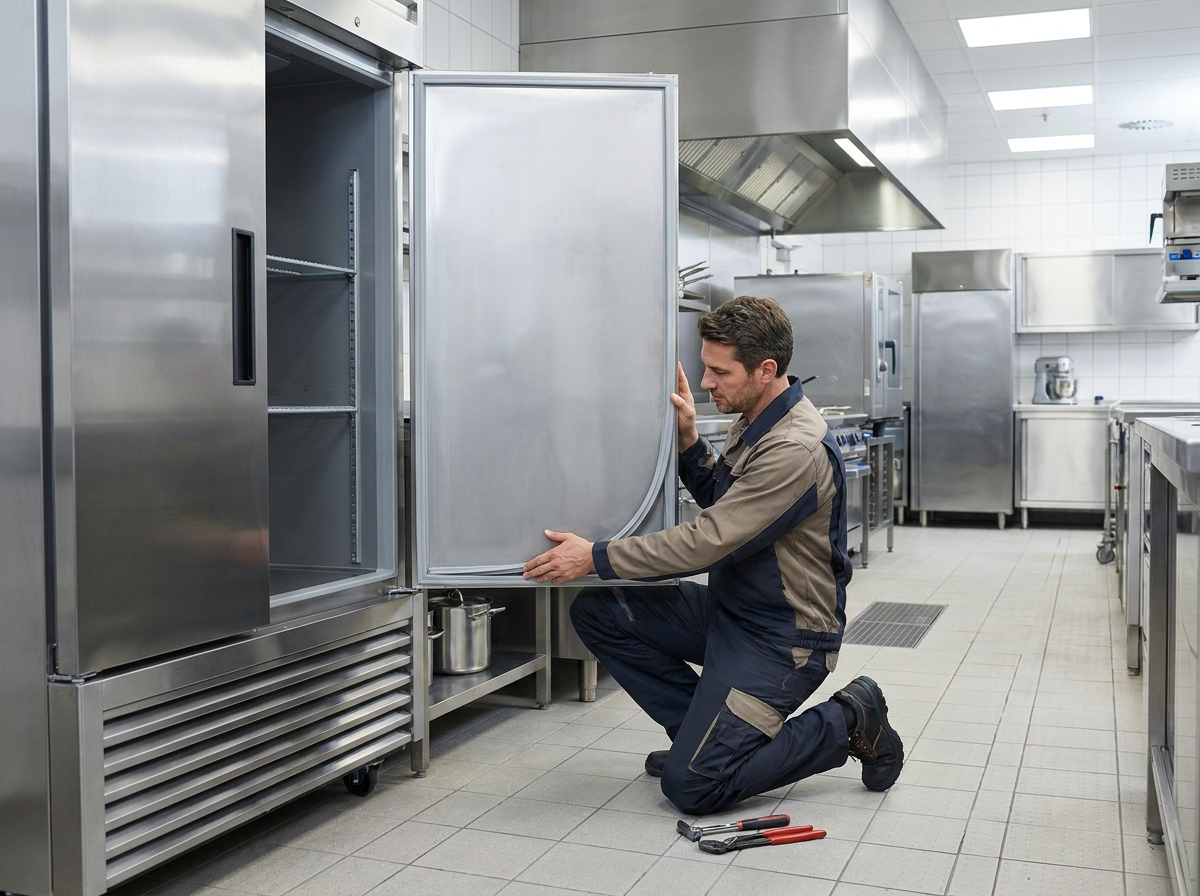
Refrigeration door gaskets are one of the most overlooked components in a commercial kitchen — until they fail. A compromised seal forces your compressor to work overtime, drives up energy bills, puts food safety at risk, and can trigger a health inspection citation. This guide covers everything you need to know: what refrigeration door gaskets do, how to tell when they need replacing, and how to choose the right type for your equipment.
What Are Refrigeration Door Gaskets?
A refrigeration door gasket is the flexible rubber or magnetic seal that runs around the perimeter of a refrigerator or freezer door. Its job is simple: create an airtight barrier between the cold interior and the warm exterior. When that barrier is intact, your unit maintains temperature efficiently. When it's not, cold air leaks out constantly — and your compressor runs nonstop trying to compensate.
In a commercial setting — restaurants, grocery stores, hotels, institutional kitchens — refrigeration door gaskets take far more abuse than in a home refrigerator. Doors open and close dozens or hundreds of times a day, often with carts, trays, and crates bumping the seals. That wear adds up fast.
Signs Your Refrigeration Door Gasket Needs Replacing
Don't wait for an obvious failure. Watch for these warning signs:
- Visible cracks, tears, or splits in the gasket material
- Hardening or stiffness — gaskets should be pliable, not rigid
- Mold or mildew growing in the folds of the gasket
- Condensation or frost forming around the door frame
- The door doesn't stay closed on its own
- Noticeable temperature fluctuations inside the unit
- Rising energy bills without another explanation
A quick field test: close the door on a dollar bill. If you can pull it out without resistance, your seal is too weak and the gasket needs attention.
Types of Commercial Refrigeration Door Gaskets
Not all refrigeration door gaskets are the same. Commercial units use several different profiles and attachment methods:
- Push-in / snap-in gaskets — the most common type on reach-in units; the gasket lip snaps into a channel in the door frame
- Screw-in / retainer gaskets — secured with a retainer strip and screws; common on older or heavy-duty units
- Magnetic gaskets — contain embedded magnets for a stronger seal; standard on most modern commercial refrigerators
- Walk-in cooler gaskets — larger-format gaskets for walk-in cooler and freezer doors, often requiring custom fabrication to fit non-standard door sizes
The right gasket depends on your specific unit — the brand, model, door dimensions, and corner style (square vs. radius). Using the wrong profile, even if it looks similar, will result in a poor seal.
How Long Do Refrigeration Door Gaskets Last?
In a commercial setting, most refrigeration door gaskets last 1 to 3 years under normal use. High-traffic doors — like the front-of-house display cooler at a grocery store — may need replacement annually. Walk-in gaskets in lower-traffic areas can last longer with proper care.
The best practice is to inspect gaskets every 6 months as part of your regular preventative maintenance routine. Catching a failing gasket early costs far less than dealing with a failed health inspection, a spoiled inventory, or a burned-out compressor.
What Happens When You Ignore a Failing Gasket
A failing refrigeration door gasket isn't just a minor inconvenience — it has real business consequences:
- Higher energy costs: A poor seal can increase a unit's energy consumption by 10–25%, depending on severity
- Compressor damage: A compressor running continuously to compensate for cold air loss wears out years faster than it should
- Food safety risk: Temperature fluctuations push food into the danger zone (40°F–140°F), creating spoilage and liability risk
- Health inspection failures: Inspectors check refrigeration temperatures — a leaking seal that causes temperature drift can result in citations or required corrective action
Custom vs. Off-the-Shelf Gaskets
For standard residential units, off-the-shelf gaskets are often fine. For commercial equipment, the calculus is different. Commercial refrigerators come in hundreds of configurations — different door heights, widths, frame depths, corner styles, and attachment methods. A gasket that's even a quarter-inch off won't seal correctly.
Custom-fabricated refrigeration door gaskets — made to the exact dimensions of your door — deliver a tighter seal, longer service life, and fewer callbacks. At Cal Gaskets, every gasket we install is custom-made from commercial-grade materials to fit your specific unit. We measure on-site, fabricate to spec, and install the same day.
Should You Replace Gaskets Yourself?
For a single reach-in unit with a simple push-in gasket, a DIY replacement is possible if you have the right replacement gasket and some patience. But there are several situations where professional installation makes more sense:
- Walk-in coolers or freezers with non-standard door sizes
- Units where the door also needs adjustment or realignment
- Multi-door cases where consistent sealing across all doors matters
- Any situation where getting it wrong means a health inspection risk
A professional installation takes 15–30 minutes per door and guarantees the seal is right. The cost is usually recovered within a few months through lower energy bills alone.
Get a Free Gasket Inspection
Cal Gaskets inspects and replaces commercial refrigeration door gaskets across Northern California — from the Bay Area to Sacramento and beyond. We custom-make every gasket to fit your exact unit and install it right the first time. Schedule a free on-site inspection today.