
Refrigeration Gasket Repair vs. Replacement: What's Actually Worth It?
May 23, 2026 · Cal Gaskets
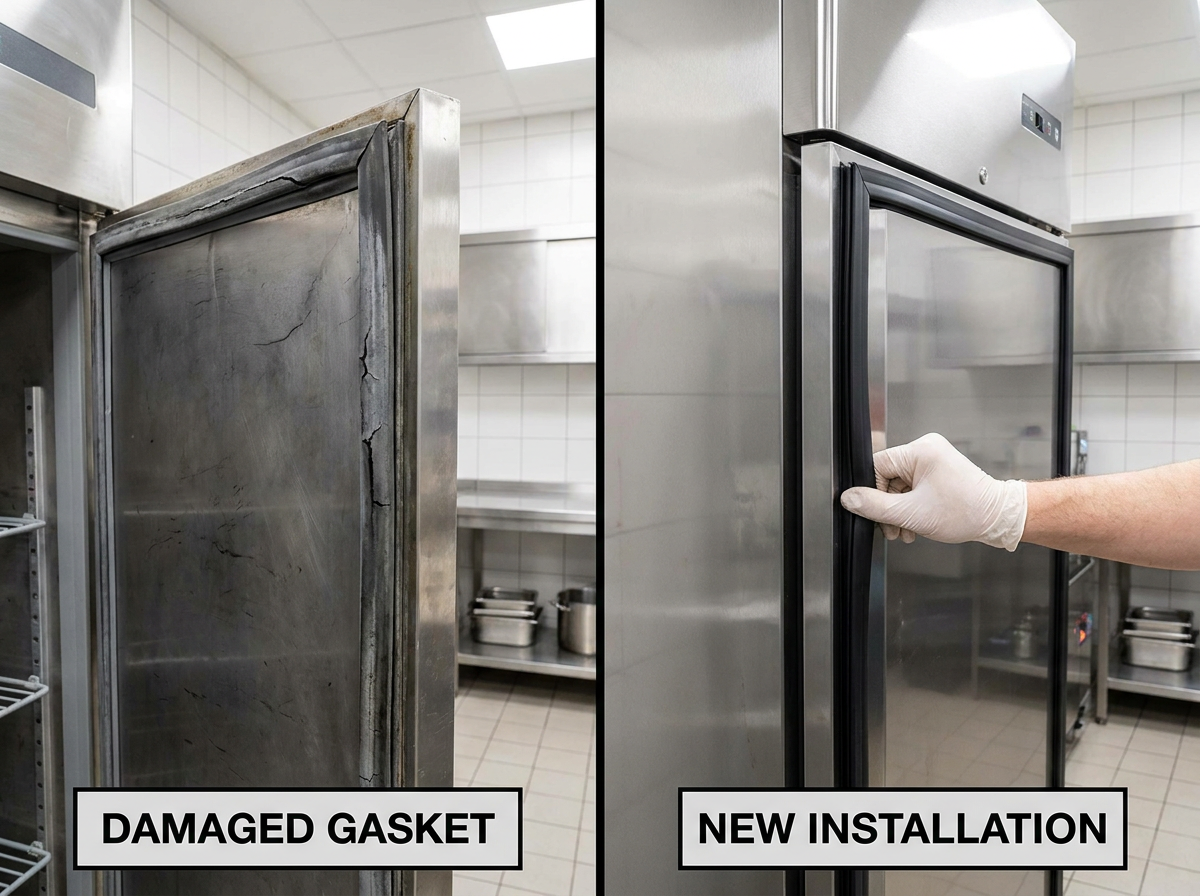
When a commercial refrigerator or freezer gasket starts failing, the first question most operators and technicians ask is: can this be repaired, or does the whole thing need to come out? It's a reasonable question — replacement takes more time and costs more upfront than a quick fix. But in commercial refrigeration, the answer to "repair or replace?" is almost always more clear-cut than it seems. Here's how to think through it correctly.
What "Refrigeration Gasket Repair" Actually Means
Before getting into repair vs. replacement, it's worth clarifying what gasket repair actually refers to — because the term gets used in a few different ways:
- Re-seating a pulled gasket — if a gasket has partially pulled out of its retainer channel but the rubber itself is still in good condition, it can sometimes be reseated without replacement. This is only viable if the rubber hasn't hardened, cracked, or lost its compression memory
- Corner repairs — the corners of a gasket take the most stress and are the most common failure point. Some technicians attempt to patch or re-bond corner separations with food-safe adhesive. This is a temporary measure at best
- Heat gun reshaping — a gasket that has become flattened or deformed in a section can sometimes be reshaped using a heat gun to restore some compression. Again, this is a short-term fix that delays rather than solves the underlying problem
- Full gasket replacement — removing the old gasket entirely and installing a new custom-fabricated one. This is the only permanent solution
The critical distinction: repair techniques address symptoms, not causes. A gasket that's failing is failing because the rubber has degraded — and degraded rubber doesn't recover. Any repair is buying time, not restoring the seal to full performance.
When Repair Is a Reasonable Short-Term Option
There are a handful of situations where a temporary repair makes sense — specifically when replacement isn't immediately possible and you need to minimize damage in the meantime:
- A gasket has pulled out of the channel in one section and the rubber is still soft and pliable — reseating it buys time while a replacement is fabricated
- You're mid-service on a unit that will be replaced soon anyway and the goal is just to keep it compliant through the next health inspection
- The damage is very minor and very recent — a small corner that's just started to separate on an otherwise new-ish gasket may be worth a temporary bond while you assess the rest of the unit
Even in these cases, "repair" should be understood as a bridge to replacement, not a solution. Schedule the replacement at the same time you do the repair.
When Replacement Is the Only Right Answer
In the vast majority of commercial gasket situations, replacement is the correct call. Here's when repair is not a viable option:
- Visible cracks, tears, or splits in the rubber — once the rubber has cracked, there's no repairing the seal. Patches don't hold under the constant compression and thermal cycling of a commercial unit
- Hardened or brittle rubber — a gasket that has lost its flexibility can't compress and rebound properly. Reshaping it with heat provides temporary relief at best; the underlying material failure remains
- Mold or mildew penetrating the gasket material — surface mold can be cleaned, but mold that has worked into the folds and material of a gasket is a food safety issue that warrants replacement, not cleaning
- Flattening or compression loss across multiple sections — a gasket that no longer springs back when compressed has lost its sealing function. This isn't a localized problem that can be spot-repaired
- Multiple failure points on the same gasket — if there's a problem at one corner, there's almost always degradation elsewhere. Patching one area while the rest continues to fail just delays the inevitable at additional cost
- Any freezer application — the thermal stress of sub-zero temperatures accelerates rubber degradation significantly. A partially failing freezer gasket should always be replaced, not repaired
The Real Cost Comparison
The reason operators consider repair over replacement is usually cost. But the math rarely favors repair when you account for the full picture:
| Factor | Repair | Replacement |
|---|---|---|
| Upfront cost | Lower | Higher |
| Seal performance after service | Partial — underlying degradation continues | Full — new seal, full compression |
| Energy savings | Minimal — root cause not resolved | Immediate — 15–25% reduction in energy waste |
| Compressor protection | Limited — compressor still overworked | Restored — compressor cycles normally again |
| Health inspection risk | Remains — partially repaired gaskets still fail inspection | Eliminated |
| Time to next service call | Weeks to months | 1.5–3 years |
A repaired gasket that fails again in 6 weeks costs you the repair call plus the replacement call — more total labor cost than just replacing it the first time. Meanwhile the compressor was still running hard throughout. Replacement once is almost always less expensive than repair followed by replacement.
What About Gasket Repair Kits?
You'll find corner repair kits and gasket patching products marketed for commercial refrigerator gaskets. These are primarily useful for facilities teams doing stopgap maintenance between scheduled professional service calls. They're not a substitute for professional assessment and replacement.
The main issue with DIY repair kits isn't the adhesive or patch material — it's the diagnosis. A repair kit applied to a gasket that's 70% degraded across its full length treats one symptom while the underlying seal failure continues everywhere else. You may pass a quick visual inspection while the unit is still bleeding cold air at every softened section.
If you're using a repair kit, it should come with a scheduled professional inspection within the next 30 days to assess whether full replacement is needed.
How to Assess Your Gasket's Condition Right Now
You don't need a technician to do a first-pass assessment. Here's a quick on-site evaluation:
- Dollar-bill test — close the door on a bill at 6–8 points around the full perimeter (top, bottom, both sides, all four corners). Firm resistance everywhere = seal is intact. Any easy pull = that section is compromised
- Visual inspection — look for cracks, tears, mold in folds, pulled sections, and areas where the gasket appears flat or crushed rather than rounded
- Compression test — press the gasket gently at multiple points. It should feel soft and spring back. Hard, stiff, or spongy sections indicate material breakdown
- Corner check — pull the corner sections slightly away from the door and inspect for separation, cracking at the joint, or loss of the foam core
- Temperature check — if the unit is struggling to hold its target temperature without an obvious mechanical cause, the gasket is the first place to look
If any of these tests reveal a problem in more than one location, or if the rubber feels hard anywhere, the right call is replacement — not repair.
The Bottom Line
Refrigeration gasket "repair" is a useful short-term bridge in limited circumstances. For any commercial unit with meaningful degradation — hardened rubber, multiple failure points, mold penetration, or any freezer application — replacement is the only solution that actually restores full seal performance, protects your compressor, and eliminates the risk of a health inspection citation.
The good news: commercial gasket replacement is fast and affordable relative to the problems it prevents. A custom-fabricated replacement gasket installed by a certified technician typically takes under an hour for a reach-in unit — and the energy savings alone usually cover the cost within a few months.
What the Difference Looks Like
This is what a gasket replacement actually delivers — side by side from a recent Cal Gaskets job:
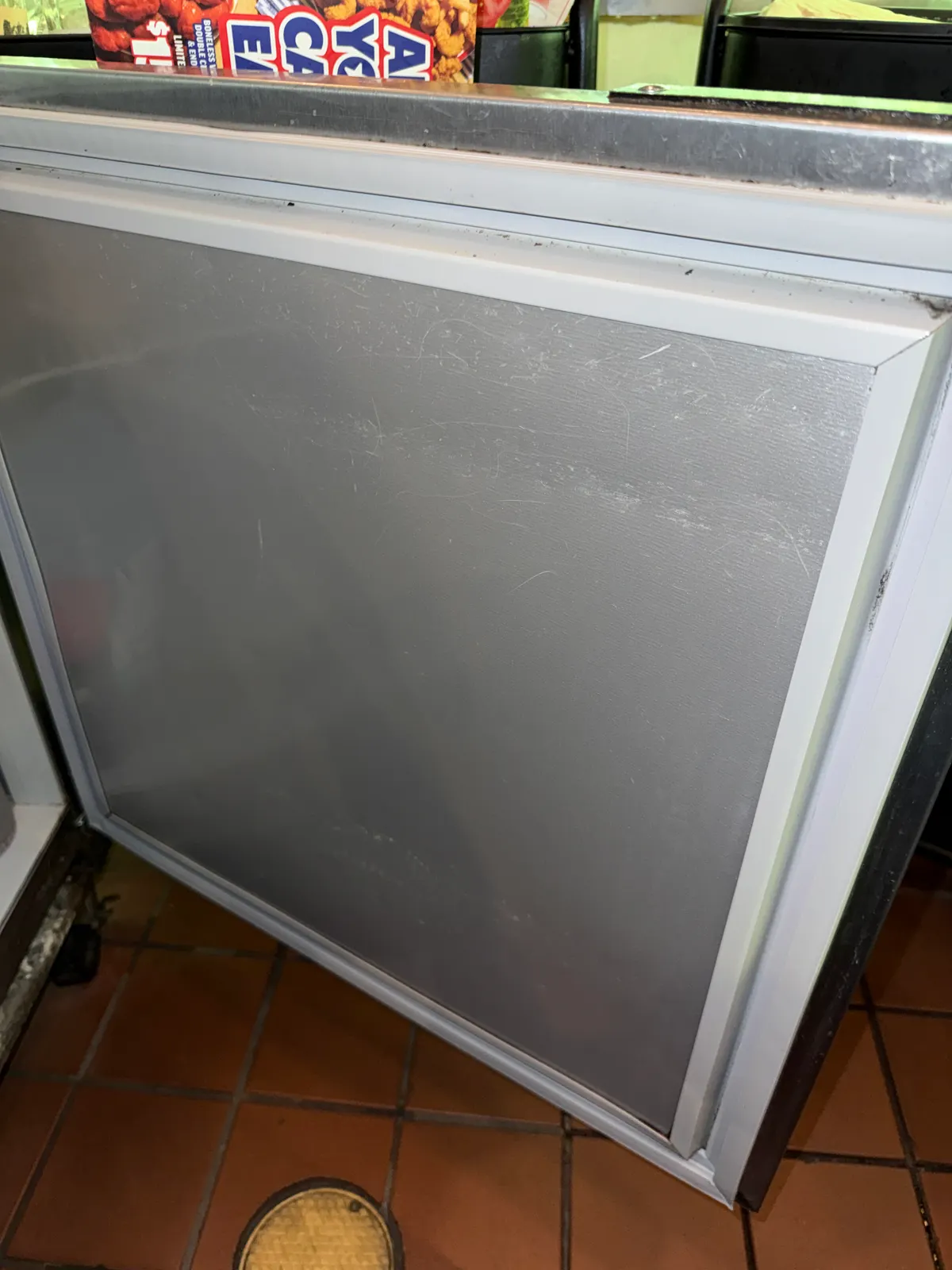 Before
Worn gasket — air infiltration, compressor strain, elevated energy costs
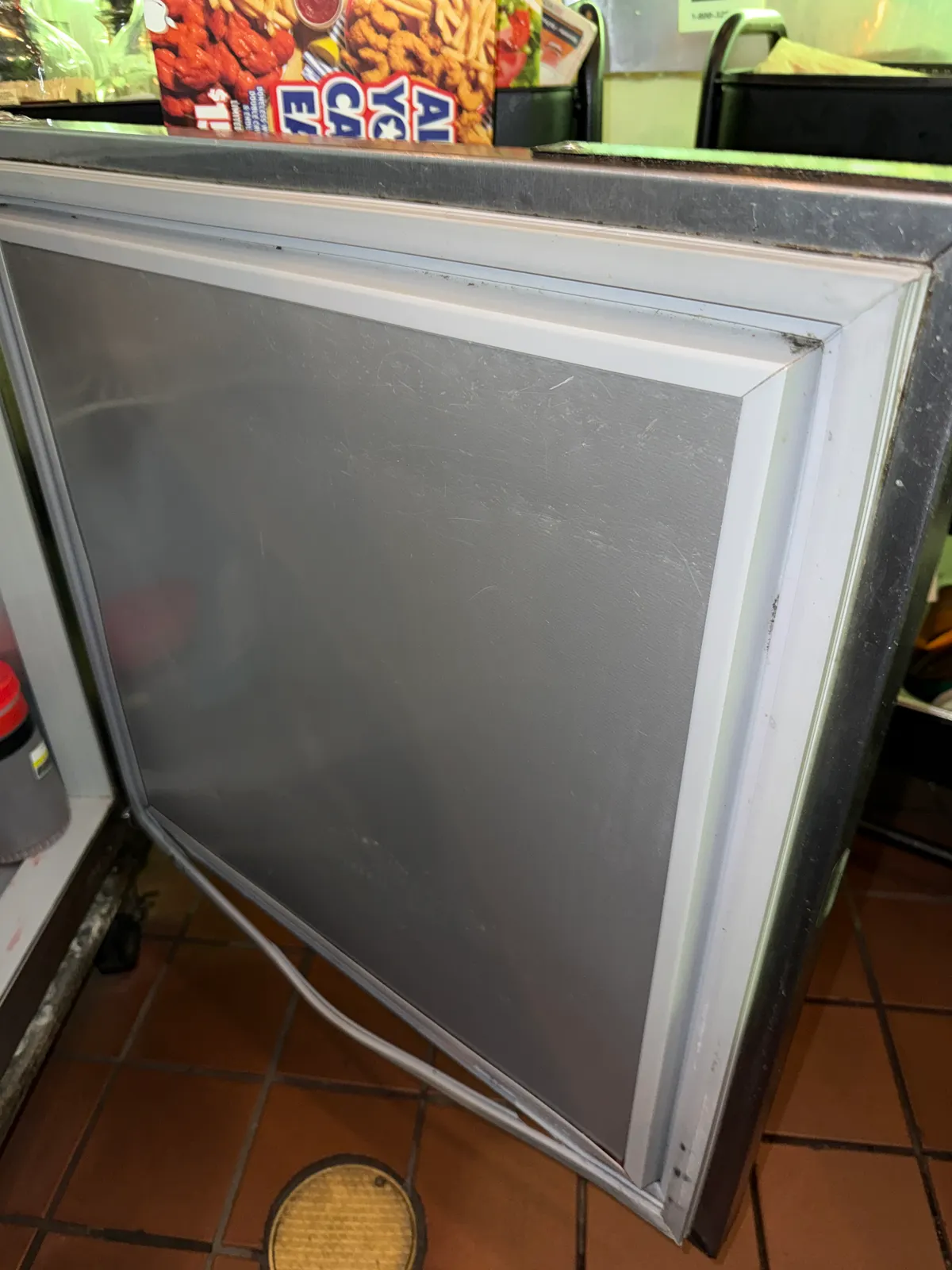 After
AfterNew custom-fabricated gasket — full seal restored, same visit
Not Sure if Yours Needs Repair or Replacement? We'll Tell You Straight.
Cal Gaskets provides free on-site gasket inspections for restaurants, grocery stores, convenience stores, and food service operators throughout the Bay Area, Sacramento, and the North Bay. We'll assess every gasket, tell you exactly what we find, and give you an honest recommendation — replacement only when it's actually needed.