
Walk-In Cooler Door Seal: Warning Signs, Real Costs, and When to Replace It
May 10, 2025 · Cal Gaskets
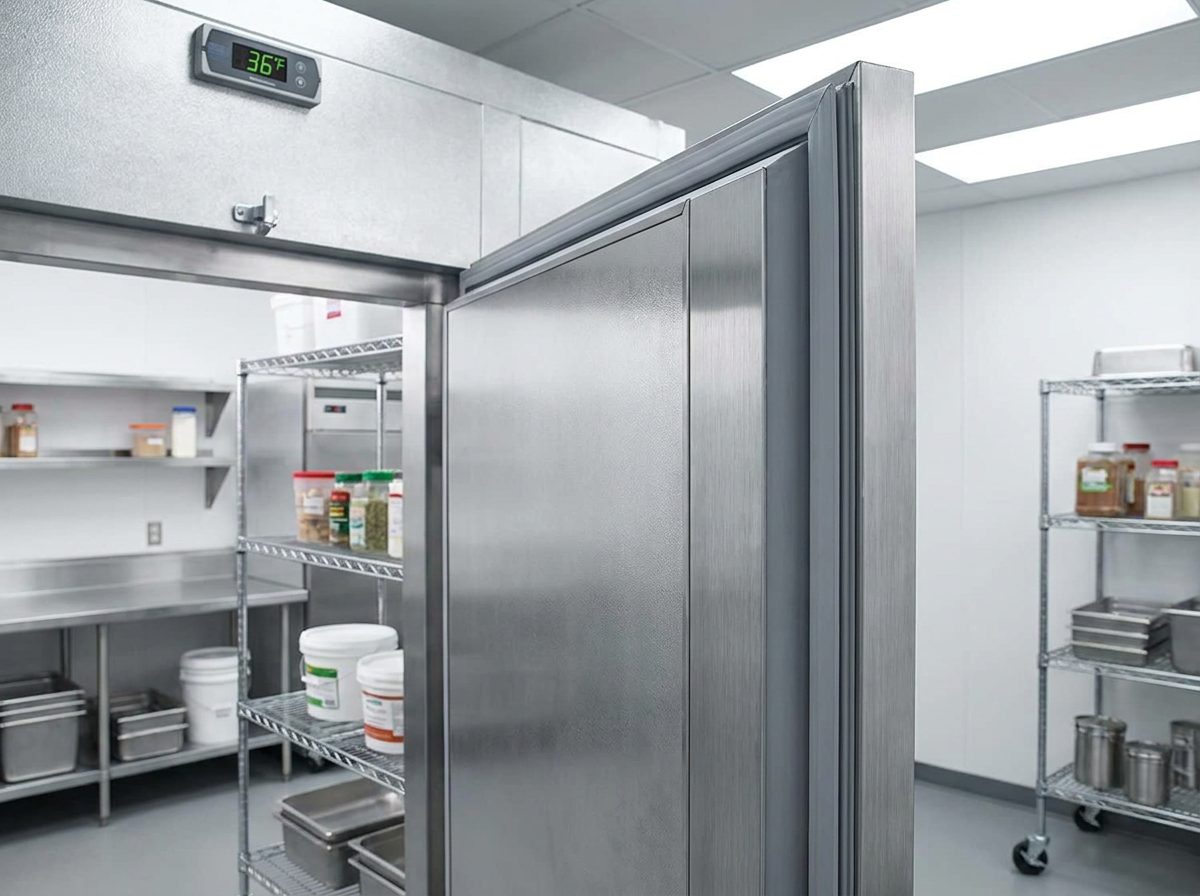
Your walk-in cooler door seal is doing a job 24 hours a day, 7 days a week — and most operators don't think about it until something goes wrong. A failing walk-in cooler door seal raises your energy bill, strains your compressor, and puts your food inventory at risk. Worse, it can trigger a health inspection citation that disrupts your entire operation. Here's what to look for, what it costs you to ignore it, and how to get it fixed.
What Does a Walk-In Cooler Door Seal Actually Do?
The door seal — sometimes called a gasket or door sweep — is the flexible rubber strip that runs around the full perimeter of your walk-in cooler or freezer door. It compresses against the door frame when the door closes to create an airtight barrier.
That barrier is doing more than you might realize. It keeps cold air in and warm, humid air out. Without a proper seal, warm air infiltrates the cooler continuously, causing temperature fluctuations, moisture buildup, frost accumulation on evaporator coils, and a compressor that runs far longer than it was designed to.
Walk-in cooler door seals take significantly more abuse than the gaskets on reach-in units. Walk-ins see heavy cart traffic, frequent entries and exits during peak hours, and often operate in demanding environments — loading docks, outdoor-access coolers, high-humidity kitchens. That wear accelerates seal degradation.
7 Warning Signs Your Walk-In Cooler Door Seal Is Failing
Don't wait for a crisis. These signs indicate your walk-in cooler door seal needs attention:
- Frost or ice buildup around the door frame — warm, moist air is infiltrating and freezing on contact with the cold surface
- Condensation on the exterior door face or frame — a sign of temperature differential caused by air leakage
- The door doesn't close flush or stay latched — often a sign the gasket has compressed unevenly or lost its shape
- Visible cracks, tears, or splits in the rubber, especially at the corners
- Soft or spongy sections — the foam core inside the gasket has broken down
- Mold or mildew growing in the gasket folds — common in cooler environments, and a health inspection flag
- Rising utility bills without a clear explanation elsewhere in your facility
The dollar-bill test works on walk-ins too: close the door on a bill at several points around the perimeter. If it pulls free without resistance anywhere, the seal isn't doing its job.
The Real Cost of a Bad Walk-In Cooler Door Seal
Operators often delay gasket replacement because it seems like a minor fix. But the costs of inaction add up quickly:
- Energy waste: A compromised walk-in door seal can increase a unit's energy consumption by 15–30%. On a unit running 24/7, that's significant — often hundreds of dollars per month
- Compressor strain: Your compressor runs longer and harder to maintain temperature. This shortens its lifespan considerably — and compressor replacement is far more expensive than a new gasket
- Food spoilage: Temperature inconsistency in a walk-in cooler puts perishables at risk. A single spoilage event can cost more than multiple years of routine gasket maintenance
- Health inspection risk: California health codes require refrigeration units to maintain proper temperatures. A door seal that causes temperature drift can result in a written violation, required corrective action, or — in serious cases — a temporary closure order
Walk-In Cooler Door Seal vs. Reach-In Gasket: Key Differences
Walk-in cooler door seals are not the same as the gaskets on reach-in refrigerators, and they shouldn't be treated the same way:
- Size: Walk-in doors are much larger — a standard 34" x 78" door has a significantly longer gasket perimeter than any reach-in unit
- Profile: Walk-in gaskets use different attachment profiles, often including a wipe seal or sweep at the door bottom to seal the floor gap
- Custom fit: Walk-in cooler door sizes are far less standardized than reach-in units, making off-the-shelf gaskets a poor fit in most cases. Custom fabrication is usually the right call
- Installation: Walk-in door seals are more involved to replace correctly. Improper installation leads to uneven compression and persistent air gaps
How Often Should Walk-In Cooler Door Seals Be Replaced?
In a commercial setting, plan on inspecting walk-in cooler door seals every 6 months and replacing them every 2–3 years on average. High-traffic coolers — like those in busy restaurant kitchens or grocery store back-of-house areas — may need replacement more frequently.
Incorporating walk-in door seal inspection into a regular preventative maintenance schedule is the most cost-effective approach. Catching a seal that's 60% degraded costs far less than dealing with the downstream consequences of a failed seal.
Getting the Right Replacement Seal
When replacing a walk-in cooler door seal, the fit has to be exact. The key measurements you need:
- Door height and width (measure the door itself, not the opening)
- Gasket profile — the cross-section shape that determines how it attaches and seals
- Corner style — square cut or radius corners, depending on your door frame
- Material — standard PVC/rubber for coolers, or a low-temp formulation for freezer applications
At Cal Gaskets, we take all measurements on-site and custom-fabricate your walk-in cooler door seal to exact specifications. We bring the finished gasket and install it the same visit — no back-and-forth, no guesswork, no air gaps.
Walk-In Seal Inspection — Free, On-Site, No Obligation
Cal Gaskets services walk-in coolers and freezers throughout Northern California — Bay Area, Sacramento, North Bay, and beyond. We'll inspect your door seals, document any issues with photos, and give you a straight answer on what needs to be done. No pressure, no upselling — just a clear picture of where your cooler stands.